
Convert units before comparing data
Identify the measured quantity, keep the original values and show the conversion rule.
Follow the method ↓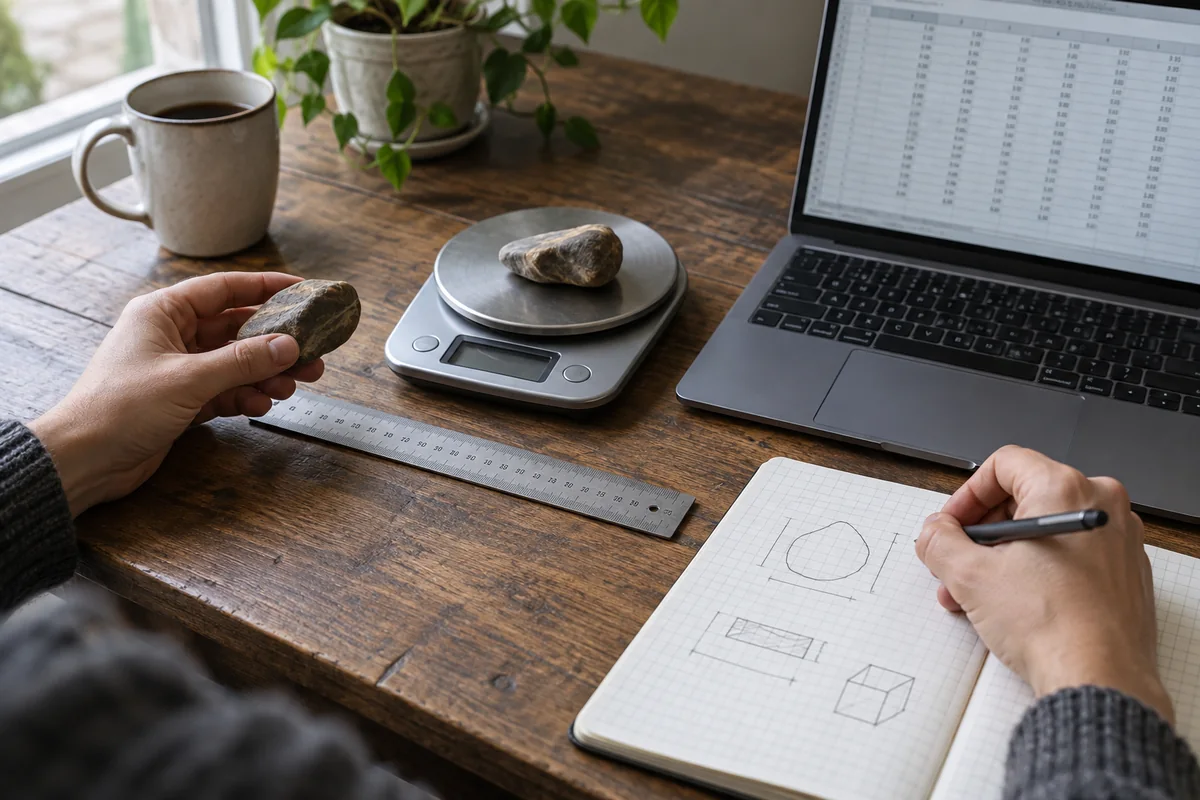
The answer in 30 seconds
Two figures can look different because one uses kilometres and the other metres, or because a rate uses a different time base. A decimal prefix has a known factor, but area, volume, temperatures and data rates need their own rules.
Record each source value and unit, decide on one common unit, apply a justified conversion and label the result. For example, 1.5 kilometres equals 1,500 metres; that arithmetic does not compare the quality of the sources.
Examples to adapt
Convert kilometres to metres before subtracting lengths.
Remember that square units scale differently from linear units.
Separate bits per second from bytes and distinguish rate from transferred quantity.
Follow the method
- 1Name the quantity
Check whether each figure measures length, area, time, temperature, rate or another property.
- 2Retain originals
Record values, units, period and source before calculation.
- 3Choose a rule
Apply the correct factor or formula and show it beside the converted value.
- 4Check sense
Confirm scale, rounding and whether the sources describe comparable things.
A checklist to keep
Use these checks to record what you found. The grid supports a decision; it does not make one for you.
| Check | What to examine | Action |
|---|---|---|
| Quantity | What is being measured? | Identify |
| Original | What are value and unit? | Record |
| Target | Which unit will all use? | Choose |
| Rule | What factor or formula applies? | Show |
| Comparison | Are definitions and periods aligned? | Check |
Free, no sign-up. UTF-8 text with semicolon-separated columns.
What to check
A prefix alone does not define an area or volume conversion.
Rates and totals have different dimensions.
Unit conversion cannot resolve incompatible definitions or periods.
Common questions
Is 1 kilometre 1,000 metres?
Yes. The SI prefix kilo denotes a factor of 1,000 for this length unit.
Can I change the label without recalculating?
No. Preserve the original and apply the correct conversion to the value.
Sources and documentation
Documentation consulted on . Examples are illustrative; interfaces and results may change.