
The method
- Record visible brand, model and references without risky disassembly. Photograph the whole object and the accessible component. Distinguish a label reference from a guessed name.
- Describe the intended function and measurements you can safely take. Note whether the part is missing, worn or simply unidentified. A symptom alone does not establish that replacement will solve the problem.
- Send useful details to the manufacturer or repairer and request written compatibility confirmation. Keep the suggested reference, limitations and work requiring a professional.
Your recording grid
Use these columns to keep information about your own project. The sheet is blank; you can print it and fill it in.
Object and modelRequired partMeasurement or photoConfirmed compatibility
Download the printable sheet (HTML) ↓Fictional worked example
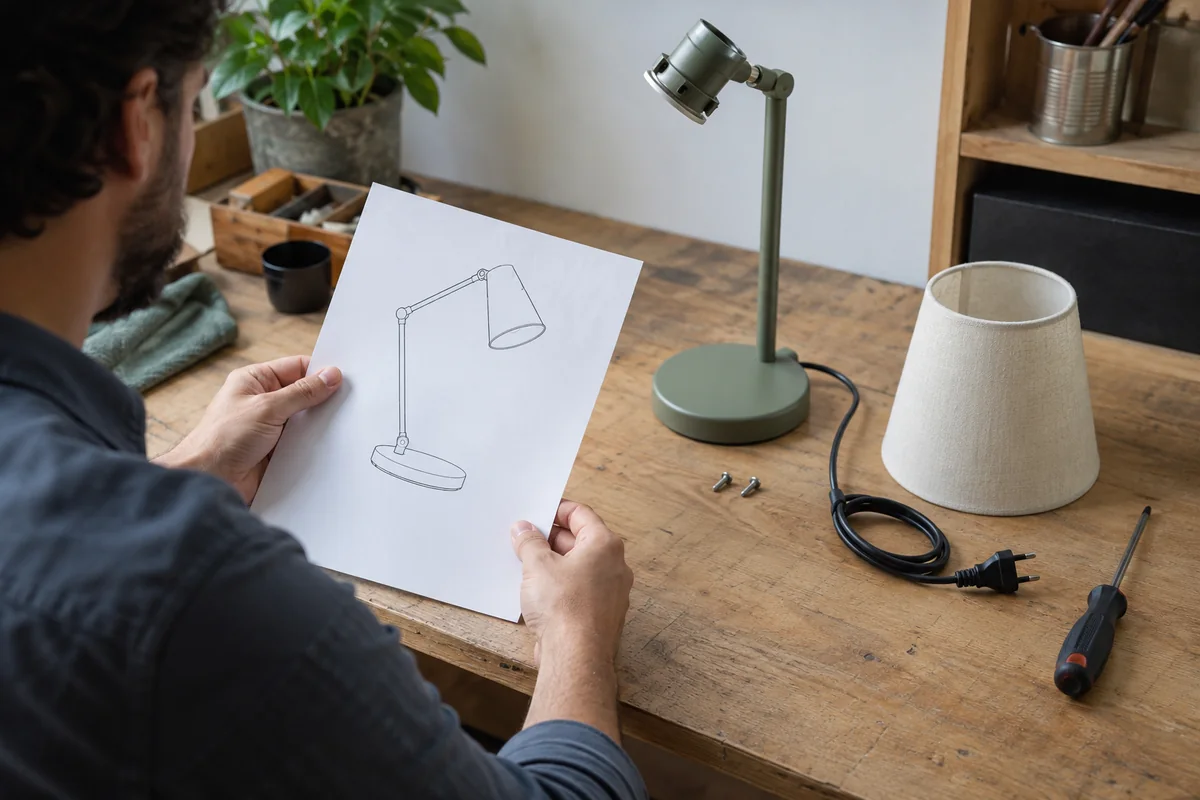
In a fictional example, two lampshades look alike but have different fittings. A measurement and photo support the enquiry; purchase awaits supplier confirmation.
The record to keep
Keep the exact model, reply and chosen reference. Mark unconfirmed suggestions as pending.
What this method can establish
This is no repair procedure. Do not work on powered equipment or open a hazardous component to complete the card.
Useful questions before you start
Is visual similarity enough?
Treat it as a clue and request confirmation for your exact model.
Must I disassemble the object?
Use safely accessible information and consult a professional when needed.
Supporting documentation
Documentation consulted on
An editorial method, a fictional example and references for further reading.