
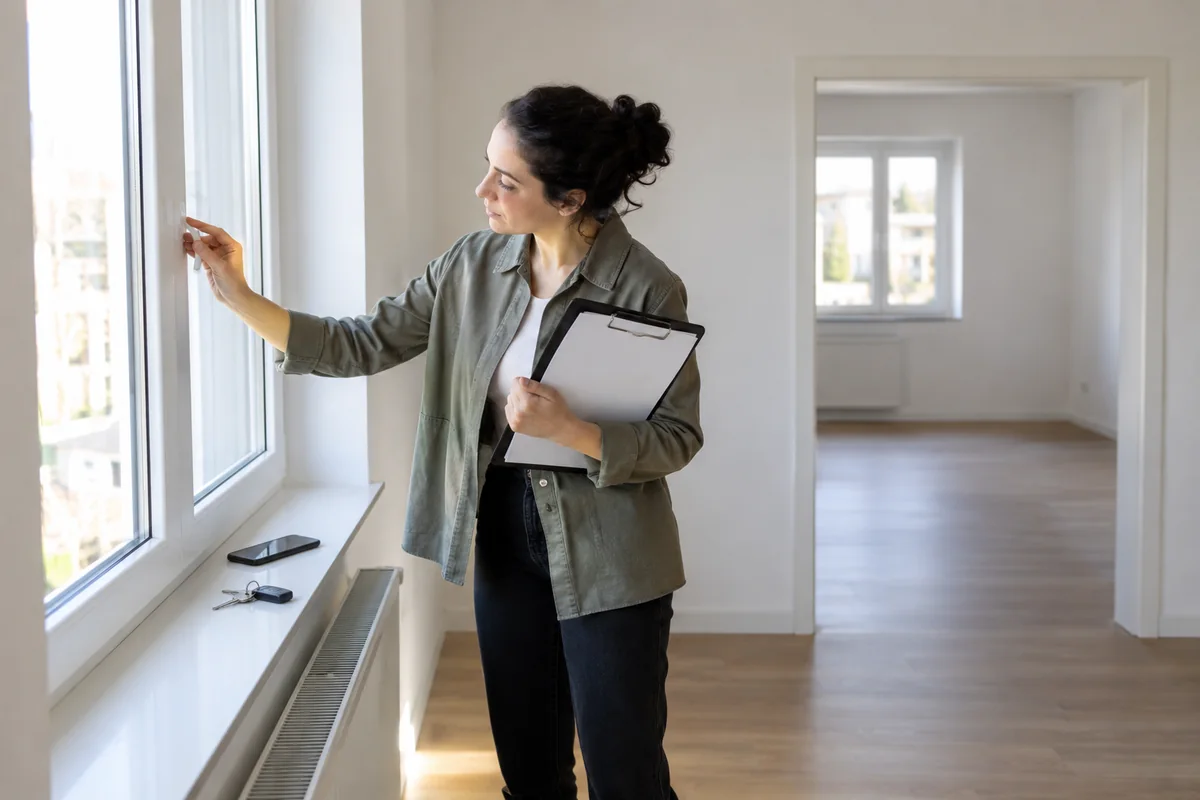
The method
- Name each room and observed feature: the wall near a window, entrance flooring or an identified appliance. Prefer a precise observation to a general judgement such as poor condition. Mark features not examined as unobserved.
- Link a useful photograph to the observation with a room reference and date. Avoid faces, private objects and personal documents in the frame. A general view and a detail answer different questions.
- Prepare points to clarify at the appointment. Read your notes separately from the document established with the parties. Do not call an appliance working when no test was performed.
Your recording grid
Use these columns to keep information about your own project. The sheet is blank; you can print it and fill it in.
Fictional worked example
In a fictional flat, a mark near a window and an untested handle occupy separate rows. One records an observation; the other retains a question.
The record to keep
Keep notes and matching images alongside the final document reference when available. Use unambiguous filenames.
What this method can establish
Translation does not extend French law to another country. For obligations or disputes, consult the official guidance and a competent adviser.
Useful questions before you start
Do these notes replace the inventory?
They prepare and locate your personal observations; they do not replace the formal document.
How should I describe an untested appliance?
Record what you saw and separately mark its operation as untested.
Supporting documentation
Documentation consulted on
An editorial method, a fictional example and references for further reading.